Services
Understanding Dermatological Disorders
Discover all you need to know about treatments and procedures we perform here at Carlisle Dermatology Group. If you find that you have any other questions unanswered, please don't hesitate to call.
Step into the world of dermatological treatment services, where skillful precision and advanced techniques blend to enhance skin health and beauty. From intricate skin cancer treatments to transformative cosmetic procedures, our surgeries heal and empower—restoring confidence and patient well-being one treatment at a time.
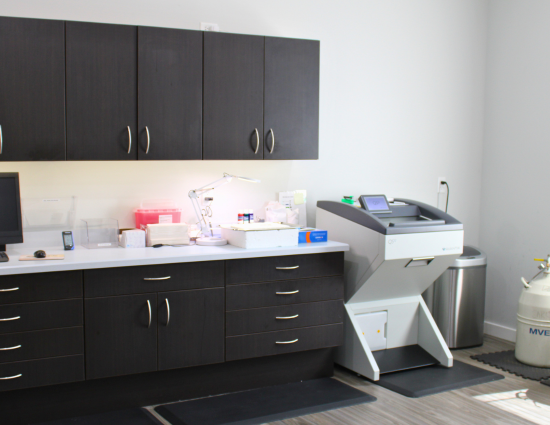
Mohs Micrographic Surgery
Mohs Micrographic Surgery is a specialized and highly effective technique for the removal of skin cancer.
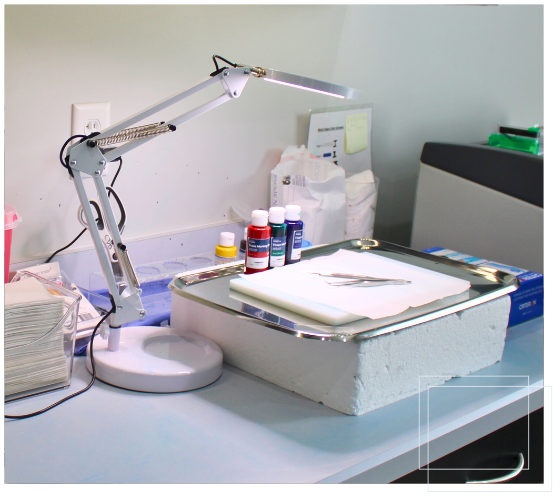
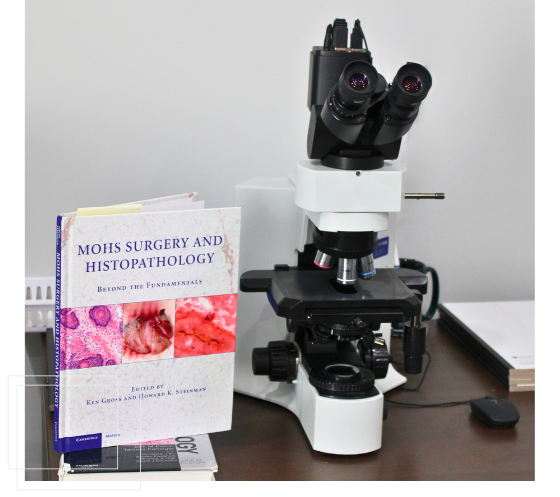
This procedure differs from other skin cancer treatments in that it permits the immediate and complete microscopic examination of the removed cancerous tissue, so that all "roots" and extensions of the cancer can be eliminated. Due to the methodical manner in which tissue is removed and examined, Mohs surgery has been recognized as the skin cancer treatment with the highest reported cure rate.
Some skin cancers can be deceptively large—far more extensive under the skin than it may appear from the surface. These cancers may have "roots" in the skin or along blood vessels, nerves, and/or cartilage. Skin cancers that have recurred following previous treatment may send out extensions deep under the scar tissue that has formed at the site. Mohs Surgery is specifically designed to remove these cancers by tracking and removing the cancerous "roots". For this reason, before the procedure, it is impossible to predict precisely how much skin will have to be removed. The patient should bear in mind that Mohs Surgery removes ONLY the cancerous tissue, sparring the normal, healthy tissue.
Insurance coverage
Please contact us if you have questions regarding insurance coverage or to see if your insurer requires you to have a referral. You may also need to contact your insurance company directly about benefits and coverage.
It's important to note that Mohs surgery is not an appropriate treatment for all skin cancers. It is selectively recommended for skin cancers that have recurred after previous treatments or those at high risk for recurrence. It is particularly suitable for cancers located in sensitive areas like the nose, ears, eyelids, lips, hairline, hands, feet, and genitals, where preserving healthy tissue is critical for both cosmetic and functional reasons.
Mohs Surgery is typically performed as an outpatient procedure in our office. Patients remain awake throughout, and discomfort is minimal and comparable to routine skin cancer surgeries.The Mohs cases can be completed in three stages or fewer, typically requiring less than four hours. However, due to the unpredictable nature of the skin cancer's depth, we recommend allocating a full day for the procedure in case additional layers need to be removed.
If the wound is closed with stitches, they'll need to be taken out after the healing process (usually 1-2 weeks after the procedure), otherwise the body will heal on its own naturally. Your surgeon will explain proper aftercare. Most patients report minimal pain, with common side effects including bruising, swelling, and slight bleeding around the wound. Should any symptoms be severe, contact your doctor right away.
Cutaneous Excisional Surgery
Cutaneous Excisional Surgery (sometimes called Surgical Excision), involves the removal of skin cancers, cysts, abnormal moles, and other lesions.
Cutaneous Excisional Surgery is a surgical procedure performed under local anesthesia to remove moles, cysts, skin cancer, and other skin growths. For treating skin cancer, the surgeon utilizes a scalpel to meticulously remove the entire tumor along with a margin of surrounding healthy tissue to ensure complete removal. This type of surgery is often used to treat skin cancer or other skin conditions that require more than just surface-level treatment.
Occasionally, the surgical site is left to heal as a secondary intention—meaning a wound will be left open (rather than just stitches) and left to heal by itself, filling in and closing naturally.
The length of the surgery will vary and depend on the extent of the skin cancer; you should expect to be in the office a minimum of one hour. The incision is usually closed with stitches that will need to be removed once healed in about 1-2 weeks post-surgery. Most wounds aren't painful after the surgery, but sometimes there is slight discomfort.
Phototherapy Treatment
Phototherapy is a dermatological treatment that uses specific wavelengths of ultraviolet (UV) light to treat various skin conditions. It is a controlled, safe form of light therapy administered by our healthcare professionals to reduce inflammation, slow skin cell production, and alleviate symptoms associated with multiple skin disorders.
Benefits
- It is Non-invasive.
- Effective for chronic and difficult-to-treat skin conditions.
- Can reduce the need for systemic medications.
- It is particularly beneficial for patients who haven’t responded well to topical treatments or other therapies.
Conditions treated
- Psoriasis - Reduces scaling, redness, and itching.
- Eczema (Atopic Dermatitis) - Alleviates itching and inflammation.
- Vitiligo - Stimulates repigmentation of the skin by activating melanocytes.
- Pruritus (Itching) - Relieves itching associated with various skin conditions.
UVB Phototherapy
UVB Phototherapy is a form of phototherapy for the treatment of psoriasis.
Natural sunlight emits a wide range of ultraviolet (UV) rays of different wavelengths, including UVA, UVB, and UVC rays. UVB rays have been found to penetrate the skin and slow down the growth of new skin cells, which can reduce the redness and flakiness of psoriasis lesions.
UVB Phototherapy is particularly effective with guttate psoriasis. Generalized plaque psoriasis may require more treatments.
Although UVB rays can be obtained through sunlight, it is safer and more effective to use a specialized light that can control the duration and intensity of UVB rays exposure. Treatment involves exposing affected areas of skin to the UVB light source for a specific length of time on a regular schedule. The UVB light may be used in the doctor’s office or at home with a home phototherapy unit obtained by prescription.
Types of UVB light treatments
- Broadband - A type of light therapy that uses a broad range of UVB light wavelengths to treat various skin conditions. It is one of the earliest forms of UVB therapy and is effective in reducing symptoms of skin disorders by slowing down abnormal skin cell growth and reducing inflammation.
- Narrowband - Emits a limited range of UVB light compared to broadband UVB lights. This type can clear up psoriasis lesions faster and provide longer remissions than broadband. This is the most commonly used form of UVB phototherapy since it targets specific layers of the skin to slow abnormal skin cell growth and reduce inflammation. It also has fewer side affects and improved efficacy.
Your doctor will recommend a UVB light suited to your particular needs. Treatment is usually repeated 3-5 times per week until lesions clear. Maintenance therapy with less frequent treatments may be recommended after as many as 25 or more treatments to get the psoriasis under control. UVB phototherapy may be combined with other psoriasis treatments, such as Soriatane® or biologics, to increase effectiveness and reduce the required medication.
Phototherapy is considered a second-line treatment and is used only for patients who haven’t had success with other measures. A special light machine is used to deliver targeted bands of UV light just where it’s needed.
Nearly 70% of patients who are treated with phototherapy have positive results, but it’s important to note that this treatment is not for everybody.
The doctor needs to determine what type of UV light is right for you to time the treatments and avoid risks to your health. The amount of light exposure is timed and increased as treatment progresses.
Phototherapy may start with very short sessions, delivered often, making it difficult for some people to fit this into their busy schedules. Some areas may not have phototherapy readily available and accessible. Talk with your doctor. A trip to the tanning bed is not a replacement for phototherapy
Photodynamic Therapy Treatment
Photodynamic Therapy (PDT) is an innovative, non-invasive dermatological treatment designed to address a wide range of skin conditions, including sun damage and precancerous lesions (like actinic keratosis).
The procedure uses a light-sensitive solution combined with specific wavelengths of light to precisely target and treat damaged or abnormal skin cells, while leaving the surrounding healthy tissue unaffected
Benefits
- Effective results - Treats the source of the issue by targeting problem cells.
- Non-invasive - No incision, injections, or systemic medications required.
- Minimal downtime - Recovery is generally quick, with mild redness or peeling, similar to a sunburn.
- Addresses a variety of concerns - Including cosmetic and medical skin conditions.